Build Your Future Through Montana Trades Programs
A trade program is an excellent option for Montana students seeking a practical, affordable path to a stable, rewarding career. Trade programs offer training in high-demand fields across Montana. Many trade careers can be completed in less time than a traditional four-year degree, allowing students to enter the workforce sooner and with less student debt. Skilled trades also provide strong starting wages, opportunities for advancement, and the chance to build a career close to home while contributing to Montana’s economy and workforce.
A wide variety of trade programs are offered at two- and four-year Montana institutions. The following provides a brief overview of trade careers and associated degrees and certifications.
Use the provided links for more information about each school’s course offerings and degree options.
Commercial Driver’s License

Obtaining a Commercial Driver’s License (CDL) can open the door to a stable, in-demand career with high earning potential. CDL holders are qualified for a wide range of driving jobs in industries such as trucking, construction, agriculture, and public transportation. With a CDL, individuals can enter the workforce quickly, gain valuable skills, and pursue long-term career opportunities.
The average pay range for a CDL truck driver in Montana is between $59,000 and $79,000 annually, with opportunities for pay increases and advancement with additional training and experience.
| School | Program Name | Credentials | General Program Details |
|---|---|---|---|
| Fort Peck Community College | Truck Driving | Certificate of Technical Studies (CDL) | Prepares students for the Class A CDL exam and entry-level truck driving jobs. FPCC pays the driver’s license fee once; students must meet Department of Transportation physical and drug test requirements. |
| Helena College | CDL/Truck Driving Training | CDL Preparation Certificate | Classroom and behind-the-wheel training focused on preparing students for the Class A CDL written and skills tests. |
| Missoula College | CDL Montana | Entry-Level Driver Training (ELDT) for CDL | Accelerated CDL training with online theory and behind-the-wheel experience geared toward Class A CDL readiness. |
| Great Falls College | CDL Training | CDL Certificate | Short-term training combining classroom instruction and simulator/practical practice to prepare for CDL testing and employment. |
| Flathead Valley Community College | CDL Program | CDL Certificate | CDL course offering training and preparation for commercial driver licensing. |
| Miles Community College | CDL Program | CDL Training Certificate | Vocational CDL training to prepare students for state CDL testing and job entry. |
| Montana Tech | CDL Program | CDL Certificate | Offers a comprehensive CDL program with classroom instruction and behind-the-wheel training to prepare students for the Class A CDL exam. |
- Class A CDL preparation is the most common focus, allowing graduates to drive heavy tractor-trailers and long-haul freight.
- Many programs combine classroom instruction with behind-the-wheel experience to meet state licensing requirements.
- Program offerings, scheduling, and endorsements (e.g., tanker, hazmat) vary by school; contact each school for details.
Welding & Fabrication

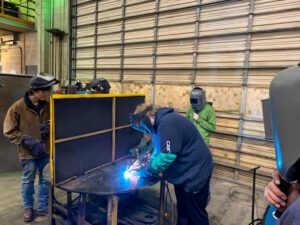
Positions for skilled welders and fabricators are available across industries such as construction, energy, manufacturing, transportation, and fabrication shops.
The average pay range for skilled welders and fabricators is $25-$28 per hour, with potential to earn up to $40 per hour with experience and additional training.
| School | Program Name | Credentials | General Program Details |
|---|---|---|---|
| Helena College | Welding Technology | CAS / AAS (varies by track) | Training in multiple welding processes and fabrication skills; prepares students for industry work and certification. |
| Missoula College | Welding Technology | Certificate / AAS | Offers welding certificate and two-year degree; includes training in MIG, TIG, Stick welding and AWS certification preparation. |
| Gallatin College | Welding Technology | CAS | Focuses on foundational welding skills, blueprint reading, and industry-relevant fabrication techniques. |
| Great Falls College | Welding Technology & Fabrication | CAS / AAS | Covers basic and advanced welding techniques with strong emphasis on fabrication and workforce readiness. |
| Montana Tech | Welding Technology | AAS | Includes structural, pipe, and fabrication training with pathways toward professional certification. |
| City College | Welding & Metal Fabrication | CAS / AAS | Hands-on program including welding, cutting processes, fabrication methods, and job-entry preparation. |
| Dawson Community College | Welding Technology | Certificate / AAS | Provides entry-level welding and fabrication training for employment in regional industries. |
| MSU Northern | Welding Technology | CAS | Certificate program focused on industry welding skills and preparation for certification exams. |
| Flathead Valley Community College | Welding & Fabrication Training | Certificate / AAS (varies) | Offers welding instruction and fabrication pathways designed to meet local workforce needs. |
| Aaniiih Nakoda College | Welding Program | Certificate | Vocational welding training supporting workforce development and skilled trades careers. |
| Fort Peck Community College | Welding Technology | Certificate | Vocational welding training supporting workforce development and skilled trades careers. |
- Most programs include training in MIG, TIG, Stick, and Flux-Core welding.
- Many prepare students for the American Welding Society (AWS) certification.
- Degree options vary by campus, with both short-term certificates and two-year workforce degrees available.
Surveying
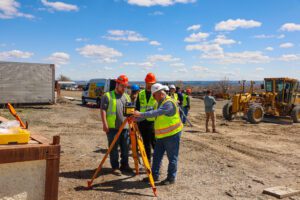
Earning a degree in surveying can lead to a stable, well-paying career in a field that plays a critical role in construction, land development, infrastructure, and natural resource management. Surveyors are in demand across Montana and nationwide to measure land boundaries, support engineering projects, and ensure accurate mapping for roads, utilities, and property development. A surveying degree provides technical skills in GPS technology, mapping software, and data analysis, along with opportunities for professional licensure and career advancement.
A surveyor in Montana can expect an average salary of approximately $59,000 to $87,000 per year, depending on experience, location, and employer.
| School | Program Name | Credentials | General Program Description |
|---|---|---|---|
| Flathead Valley Community College | Surveying | Associate of Applied Science (AAS) | A two-year surveying program that teaches advanced surveying techniques, CAD/GIS skills, and practical field training. Prepares students for careers in land surveying, mapping, construction layout, and related technical roles. |
Heavy Equipment Operator
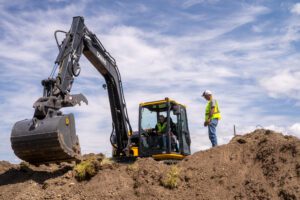
Earning training, a certification, or a degree as a heavy equipment operator can lead to a strong career in Montana’s construction, transportation, mining, and infrastructure industries. Heavy equipment operators are essential for building roads, bridges, utilities, and commercial projects, making the field consistently in demand. These programs provide experience operating machinery, including excavators, loaders, bulldozers, and graders, as well as important safety and technical skills. With the right credentials, graduates can qualify for well-paying jobs, opportunities for advancement, and long-term career stability in a skilled trade that supports Montana’s growing workforce needs.
The average heavy equipment operator salary range in Montana is $61,300 – $69,000, depending on education, certification, skills, and experience.
| School | Program Name | Credentials | General Program Details |
|---|---|---|---|
| Missoula College | Heavy Equipment Operation | Certificate of Applied Science (CAS) | Provides engaged training to safely operate and maintain a variety of heavy equipment (e.g., backhoes, excavators, graders), with safety, surveying, and equipment controls instruction. |
| Flathead Valley Community College | Heavy Equipment Operator | Certificate of Technical Studies (CTS) | Focuses on essential operating skills for construction and earthmoving equipment, career-ready training including bulldozers, backhoes, excavators, and training toward a Class A CDL. |
Construction Management
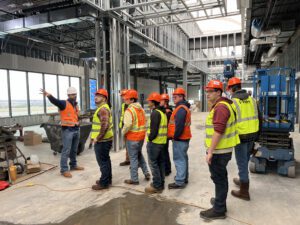
Earning a construction management degree or certification can open the door to leadership roles in one of Montana’s most essential and growing industries. Construction managers oversee projects from planning to completion, coordinating crews, budgets, timelines, and safety standards. A construction management education provides skills in project management, cost estimation, scheduling, contract administration, and team leadership. This credential can lead to higher earning potential, career advancement, and greater job stability than entry-level construction roles. Construction management professionals are in demand for residential, commercial, infrastructure, and industrial projects, offering long-term opportunities to build a rewarding career.
In Montana, individuals with a construction management education can expect competitive earnings, especially as they gain experience and take on greater responsibilities. Construction managers in the state earn an average of approximately $133,000 per year.
| School | Program Name | Credentials | General Program Details |
|---|---|---|---|
| University of Montana | Construction Management | Certificate /Associate of Applied Science (AAS) | Degree or certificate program focused on project planning, building systems, jobsite safety, estimating, scheduling, and construction supervision. Designed to prepare students for entry-level management roles in residential and commercial construction. |
| Montana Tech | Construction Management | Bachelor of Science (BS) | Four-year degree emphasizing project management, cost estimating, scheduling, materials, safety, contracts, and construction methods. Prepares graduates for leadership roles in commercial, industrial, and infrastructure projects. |
| City College | Construction Management / Construction Technology | Associate of Applied Science (AAS) / Certificate of Applied Science (CAS) | Program focuses on construction supervision, blueprint reading, estimating, scheduling, and field operations. Designed to prepare students for project management support and construction leadership positions. |
Carpentry
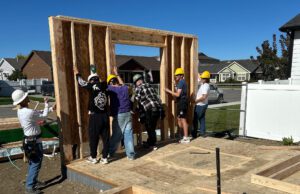
Carpenters are essential to Montana’s residential and commercial growth. Through training, students learn essential techniques to prepare them for work on residential, commercial, and industrial projects. With experience, carpentry professionals can advance into specialized trades, project management, or business ownership, making it a strong pathway to long-term job stability and growth.
In Montana, skilled carpenters earn around $50,000 to $65,000 per year, with opportunities to earn more as experience and specialized skills increase.
| School | Program Name | Credentials | General Program Description |
|---|---|---|---|
| Missoula College | Carpentry | Certificate of Applied Science (CAS) | One-year carpentry training covering site prep, framing, roofing, siding, finish work, and basic construction skills to prepare students for entry-level carpentry roles. |
| Gallatin College | Carpentry | Certificate of Applied Science (CAS) | Two-semester program combining classroom instruction and active training in fundamental and advanced carpentry skills, including safety, blueprint reading, rough framing, and finishing. |
| Highlands College | Construction Technology – Carpentry | Associate of Applied Science (AAS) / Certificate of Applied Science (CAS) | Comprehensive construction technology program with carpentry focus; includes hands-on learning building homes and structures and prepares students for construction trades careers. |
| Aaniiih Nakoda College | Industrial Trades | Associate of Applied Science (AAS) | Multi-discipline building trades program providing skills in carpentry, welding, HVAC, woodworking, and foundational construction trades to prepare students for employment in the building industry. |
Electrical
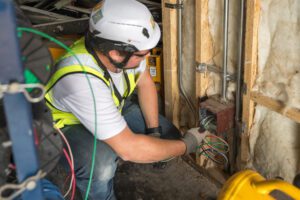
An Electrical Technology degree can lead to multiple career opportunities in Montana’s construction, energy, manufacturing, and maintenance industries. With formal training, students learn electrical theory, wiring methods, motor controls, blueprint reading, safety codes, and troubleshooting skills, preparing them to work in residential, commercial, and industrial settings. With additional experience and licensure, individuals can move into supervisory roles, project management, or even start their own electrical contracting business.
In Montana, someone with an Electrical Technology degree working as an electrician or electrical technician typically earns around $55,000 to $65,000 per year, with journeyman electricians and experienced technicians often making toward the $70,000+ range, depending on experience, location, and specialization.
| School | Program Name | Credentials | General Program Description |
|---|---|---|---|
| Flathead Valley Community College | Electrical Technology | Certificate of Applied Science (CAS) Associate of Applied Science (AAS) | Direct electrical training program providing skills in residential, commercial, and industrial wiring, electrical systems, and safety practices to prepare students for employment and apprenticeship opportunities in the electrical industry. |
Plumbing
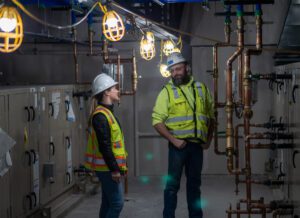
A plumbing and pipefitting education provides training that leads to stable, well-paying careers in residential, commercial, and industrial construction. Graduates can pursue careers as apprentice plumbers, journeyman plumbers (after licensure), pipefitters, steamfitters, maintenance technicians, or eventually master plumbers and contractors. With strong demand across Montana’s growing communities and infrastructure projects, plumbing and pipefitting offer long-term job security, opportunities for advancement, and the potential to start an independent business.
The average annual salary for plumbers in the state is approximately $65,000–$67,000 per year (about $31–$34 per hour), with entry-level positions typically starting at a lower rate, while experienced plumbers and pipefitters can earn toward the $80,000 range or higher, depending on skills, licensure, location, and employer.
| School | Program Name | Credentials | General Program Details |
|---|---|---|---|
| Flathead Valley Community College | Plumbing Apprenticeship | Apprenticeship | Gain essential skills through expert-led classroom instruction, training and paid, practical experience on the job. |
| MSU Northern | Plumbing Technology | Associate of Applied Science (AAS) | Hands-on Associate of Applied Science program teaching installation, repair, and maintenance of residential, commercial, and industrial plumbing systems, state plumbing codes, and essential trade skills to prepare students for apprentice plumber careers and industry success. |
| Aaniiih Nakoda College | Industrial Trades (includes Plumbing) | Associate of Applied Science (AAS) | Multi-discipline trades program that includes plumbing alongside other trades skills to prepare students for building and maintenance careers. |
- Some programs are standalone plumbing certificates or degrees, while others combine plumbing with industrial trades or building trades curriculum.
- These programs typically include labs, code interpretation, safety training, and apprenticeship preparation.
- Completing a recognized program can help students enter registered apprenticeship programs and work toward journeyman licensing.
Heating, Ventilation, and Air Conditioning (HVAC)

A Heating, Ventilation, and Air Conditioning (HVAC) education prepares students for a skilled career in installing, maintaining, and repairing climate control systems in homes, businesses, and industrial settings. With training in system diagnostics, refrigeration, electrical controls, and energy efficiency, graduates are prepared for roles such as HVAC technician, service specialist, installation technician, and system maintainer.
On average, HVAC technicians in the state earn around $58,294 per year (about $28 per hour), with typical pay ranging from approximately $47,845 to $68,277 depending on experience and employer. Other salary estimates also show HVAC roles averaging roughly $62,867 per year (about $30 per hour) across the state. Entry-level HVAC technicians may start at a lower pay, while experienced technicians and those with advanced certifications or specialization can earn higher wages as they grow in the field.
| School | Program Name | Credentials | General Program Details |
|---|---|---|---|
| Flathead Valley Community College | Heating, Ventilation, Air-Conditioning & Refrigeration (HVAC) | Certificate of Technical Studies (CTS) | Engaged training focused on essential HVAC installation, maintenance, and repair skills for residential and light commercial systems, taught to industry standards. Prepares students for careers as HVAC technicians, refrigeration specialists, and facility maintenance technicians, with curriculum aligned to North American Technician Excellence (NATE) certification standards. |